
Customer Support Hiring Is Down 65%.
That Doesn’t Mean You Should Cut Yours.

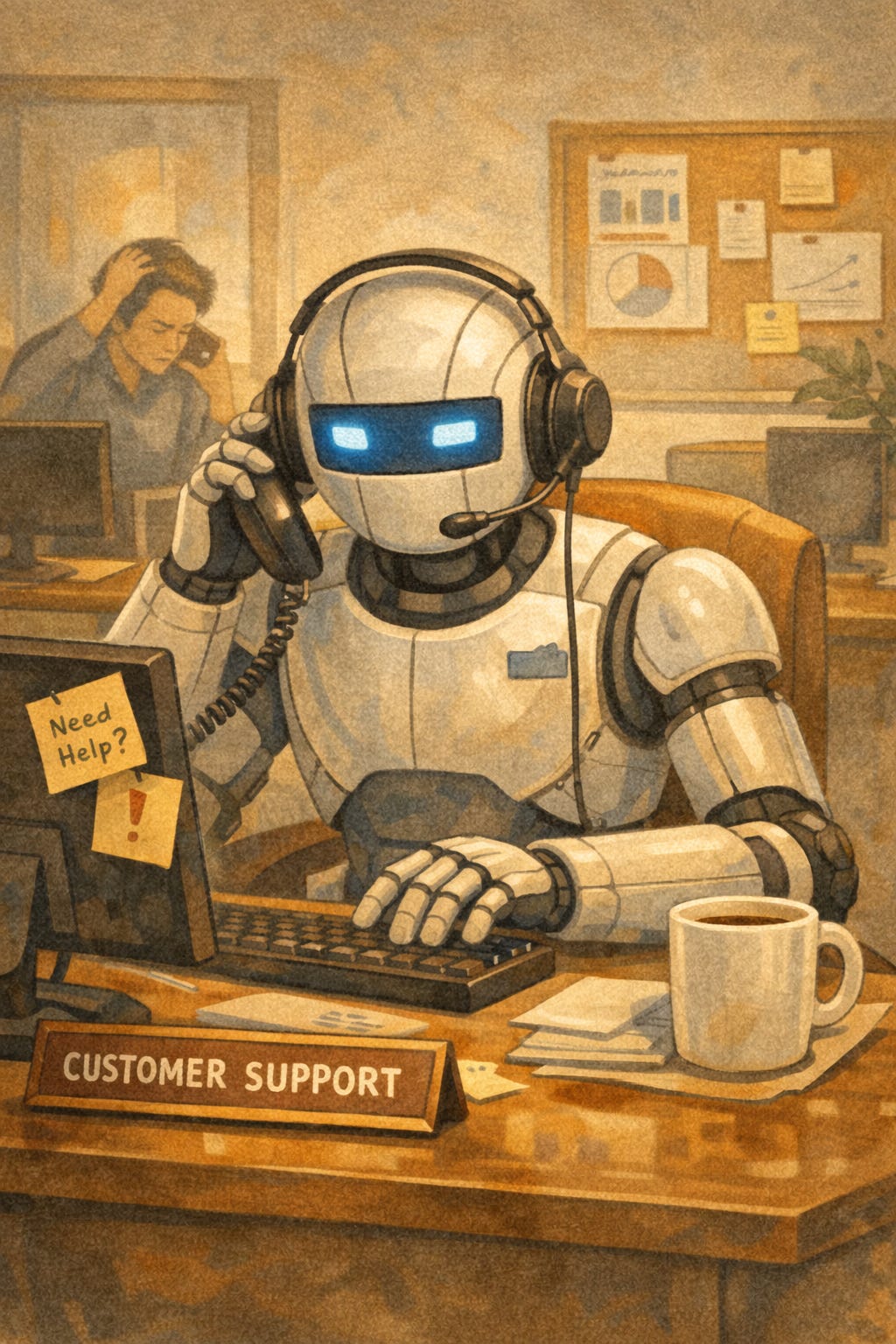
Last week, SaaStr shared data from Pave showing that customer support hiring has dropped 65% in two years.
From 8.3% of new hires to 2.88%.
It’s a striking stat, and it’s accelerating.
You can read the full SaaStr breakdown here.
And the underlying Pave info here.
If you’re a founder, it’s tempting to read that headline and think:
“Finally. A way to save money and headaches.”
AI can handle Tier 1.
Fin can crush tickets.
We don’t need that many humans anymore.
I get the instinct.
But here’s what worries me:
Founders are going to overcorrect.
And support is not the clean, plug-and-play AI category everyone wants it to be.
I’ve Seen AI Support in Action. It’s Not Magic.
I’ve worked inside platforms that are complicated.
Evolving.
Full of edge cases.
When we tested AI support tools like Fin, the promise was compelling.
40–60% ticket deflection.
Faster response times.
Lower headcount pressure.
In reality?
It frequently gave incorrect answers.
It struggled with nuance.
It didn’t have access to all the institutional knowledge living in Slack, Notion, old docs, product updates, and human brains.
Here’s the part founders forget:
If your platform is complex and constantly changing, AI cannot answer questions it hasn’t been properly trained on.
And if you’ve been following me long enough, you get the gist that most companies don’t actually have their knowledge structured well enough to train it.
So what happens?
Customers get frustrated.
They repeat themselves.
They just want to be heard.
Instead they get a confident but wrong answer from a bot.
That’s erosion of trust. Not efficiency.
AI Is Restructuring Support. But It’s Not Replacing Responsibility.
I do believe AI is here to stay.
It will become Tier 1 in many organizations.
It will deflect repetitive tickets.
It will reduce certain kinds of hiring.
BUT I believe the deeper shift isn’t about fewer humans.
It’s about better systems.
The companies that scale well aren’t just cutting support.
They’re doing something much harder.
They’re redesigning the entire lifecycle.
The Real Opportunity: Slow Down to Speed Up
Support volume is rarely just a support problem.
It’s usually:
Messy onboarding.
Vague handoffs from sales.
No clear activation milestones.
Documentation scattered across tools.
No structured review of ticket trends.
Or product problems.
You can deflect tickets with AI.
OR (and hear me out), you can reduce tickets by fixing root causes.
Those are not the same thing.
Clean onboarding alone can cut ticket volume dramatically.
When customers know what’s happening, what to expect, and how to use your product, they ask fewer reactive questions.
Weekly review of ticket themes can expose product friction.
Clear documentation reduces dependency on tribal knowledge.
That work is slower.
It’s less flashy than installing an AI agent, but it builds leverage.
Ironically, it’s what actually makes AI usable later.
AI only works well when your knowledge is structured, consistent, and up to date.
Humans have to design that system.
What Founders Will Get Wrong
Here’s my fear:
Founders will see the 65% stat and think:
“We’re ahead of the curve if we cut support.”
Instead of asking:
“Is our lifecycle clean enough to automate responsibly?”
AI can absolutely deflect simple tickets.
Password resets.
Basic how-tos.
Standard troubleshooting.
But if your onboarding is inconsistent and your product is complex, AI won’t fix that.
It will amplify it.
You don’t get to skip operational maturity just because a bot exists.
The Shift in Human Value
Here’s where I’m optimistic.
The value of humans isn’t disappearing.
It’s shifting.
Humans become:
System designers.
Pattern spotters.
Escalation handlers.
Trust builders.
Translators between product and customer.
The more automation increases, the more customers will crave being understood when things go wrong.
Support teams won’t disappear.
They’ll look different.
Higher context.
Closer to product.
More strategic.
And yes, over time, human empathy may become the moat.
If everyone has AI Tier 1, the differentiator becomes how you handle the moments when AI fails.
A Simple Framework for the AI Support Era
Before you cut a single support role, ask yourself:
1. Is our onboarding mapped and documented end-to-end?
Clear owners. Clear SLAs. Clear milestones.
2. Do we review ticket trends weekly and fix root causes?
Or are we just responding faster?
3. Is our knowledge centralized and structured?
Or is it living in five tools and three people’s heads?
If you can’t confidently answer yes to those, AI won’t save you.
It will just expose the gaps faster.
AI Is a Multiplier. Not a Replacement.
AI is not the enemy, but it’s also not the operator.
It executes.
Humans design.
If you want to prepare your team for what’s happening, don’t just reduce headcount.
Redesign the lifecycle.
Clarify ownership.
Invest in documentation.
Train your team to think in systems.
That’s how you use this moment well.
Customer support may be the first category reshaped by AI.
It won’t be the last.
The companies that win won’t be the ones who cut fastest.
They’ll be the ones who build clean foundations and automate on top of them.
Join me March 19th…
As AI reshapes entire functions, the real question isn’t whether you’ll still be needed.
It’s whether you can clearly articulate the value you bring.
Support is just the first category being repriced.
More roles will follow.
If what you do lives inside a job title, a team structure, or a company org chart, it’s vulnerable.
If you can define the problem your experience actually solves — independent of the role — you’re adaptable.
Juan and I are hosting a live workshop on this exact topic:
Can what you know stand on its own?
If AI is repricing expertise, this is the moment to get very clear on yours.
Join us March 19.

Interesting trend and It also aligns with what I’ve seen.
Knowledge-intensive work is being pushed into AI-assisted workflows, reducing the need for human repetition.
The real question is whether organizations are capturing the learning from these interactions - or just cutting headcount.
This is such an excellent post, Katie, thank you for bringing your valuable insights into this important discussion. I was just wondering from your experience of working at the boardroom level to what extent a lot of this is FOMO, and is this called out by the senior leadership teams or not?